Multi-WAN dynamic connectivity
A site can be connected to multiple WAN links simultaneously to improve availability, performance, and bandwidth utilization.
Common use cases include:
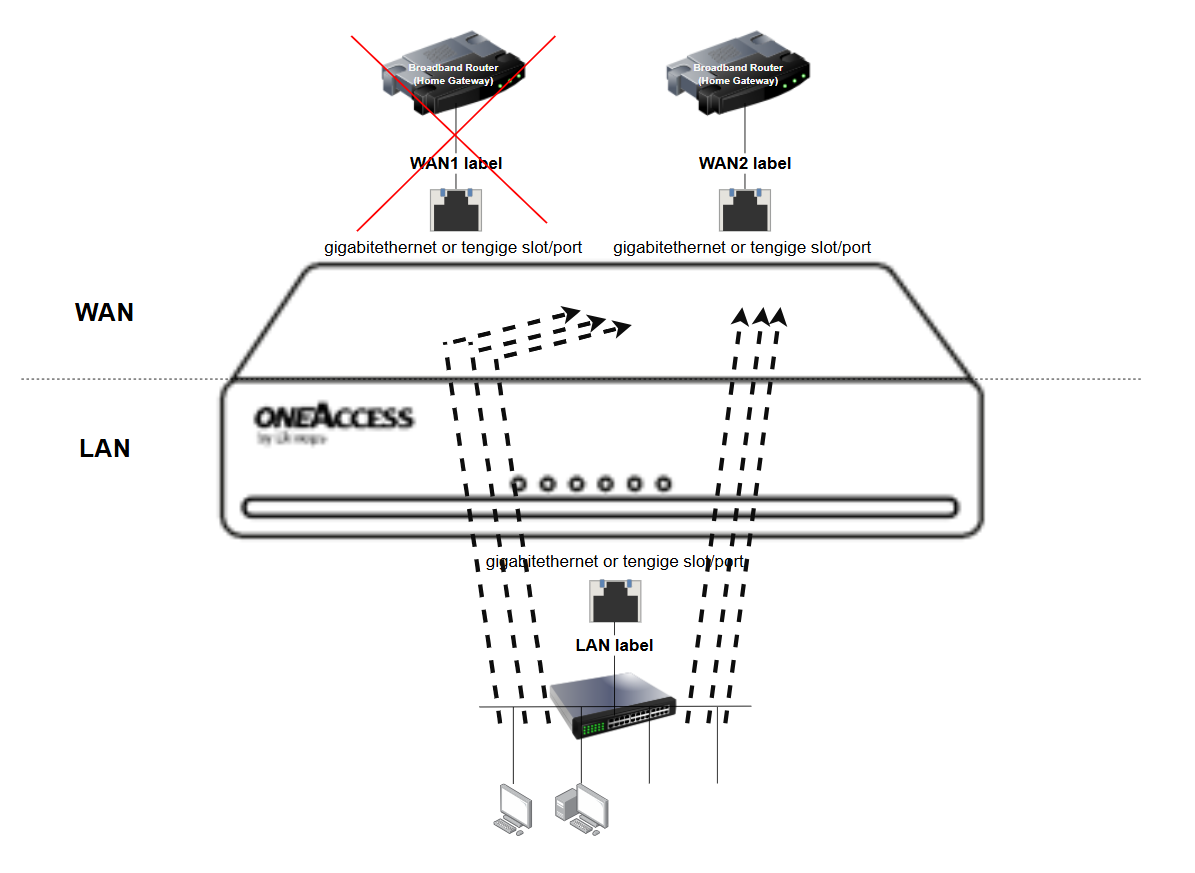
Redundancy, for example by using a 5G connection as a backup for a primary fiber link. If the primary link fails, traffic can continue to use the backup link, helping maintain network connectivity.
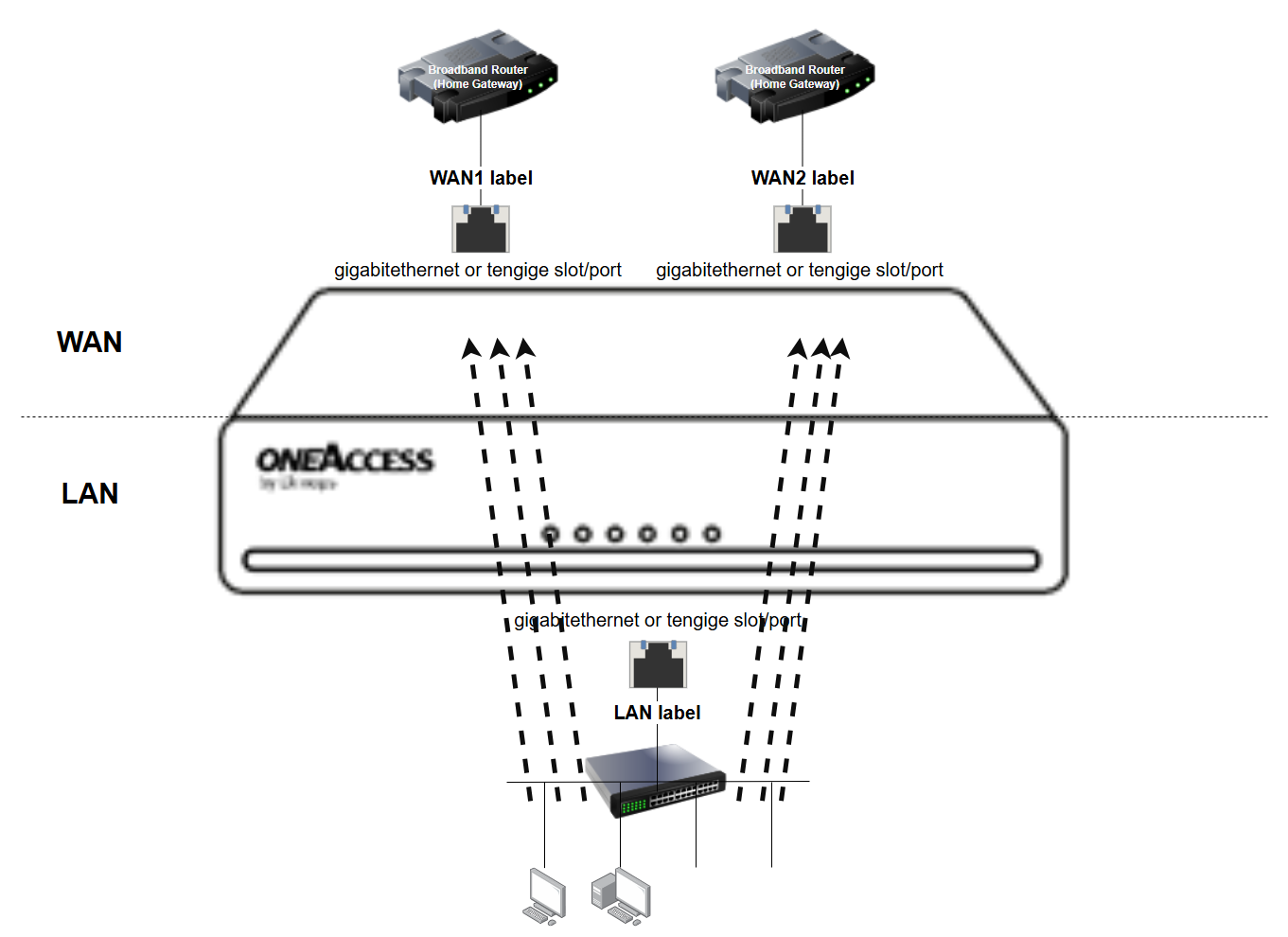
Load balancing, by distributing traffic across multiple active WAN links. This helps make better use of the available bandwidth and can improve overall network performance.
Advanced link-sharing policies provide dynamic WAN management and allow traffic to be distributed according to business and performance requirements.
These policies can be used to:
Prioritize fiber links for most traffic while reserving 5G connectivity for critical business applications.
Choose the WAN path that best meets performance objectives such as latency, jitter, or packet loss.
Traffic distribution is performed on a per-flow basis. A flow represents a communication session between endpoints, such as a web browsing session, a video call, or a file transfer. Once a flow is established, it remains on the selected WAN link for its duration to avoid service interruptions.
When a WAN link becomes unavailable, new traffic flows are automatically redirected to another available WAN link within the overlay. Existing flows are not migrated to a different WAN link and remain on their originally selected path. This approach helps maintain session stability and avoids disrupting active applications.
When multiple WAN links are available, new traffic flows can be distributed across the available links according to the configured link-sharing policy.
The following example illustrates WAN redundancy and automatic failover.
 |
The following example illustrates load balancing across multiple WAN links.
 |
Dynamic WAN connectivity continuously monitors WAN link availability and quality by measuring latency, jitter, and packet loss.
These metrics are used to determine the most appropriate WAN link for new traffic flows:
Availability indicates whether a WAN link is operational and able to carry traffic.
Latency reflects network responsiveness and can affect application performance.
Jitter indicates the consistency of packet delivery and is particularly important for voice and video traffic.
Packet loss reflects the reliability of data transmission and can impact throughput and application quality.
If a link becomes unavailable or its performance degrades, new traffic flows can be steered to a more suitable WAN link.
Dynamic Path Selection
WAN path selection is continuously adapted to the current state of the available links.
This enables the SD-WAN solution to automatically route new traffic flows through the WAN link that best satisfies the configured availability and performance objectives.
For example, if the fiber connection experiences high latency or packet loss while a secondary WAN link offers better performance, new traffic flows can automatically be directed through the secondary link to maintain application quality.