Edge redundancy
For critical sites such as headquarters, data centers, or major branch offices, WAN redundancy alone may not provide sufficient resilience. In these environments, a second SD-WAN router can be deployed to provide full edge redundancy.
A site can therefore be deployed in one of two modes:
Single-edge, with a single router serving the site.
Dual-edge, with two routers serving the same site.
The dual-edge architecture relies on the Virtual Router Redundancy Protocol (VRRP) on the LAN side.
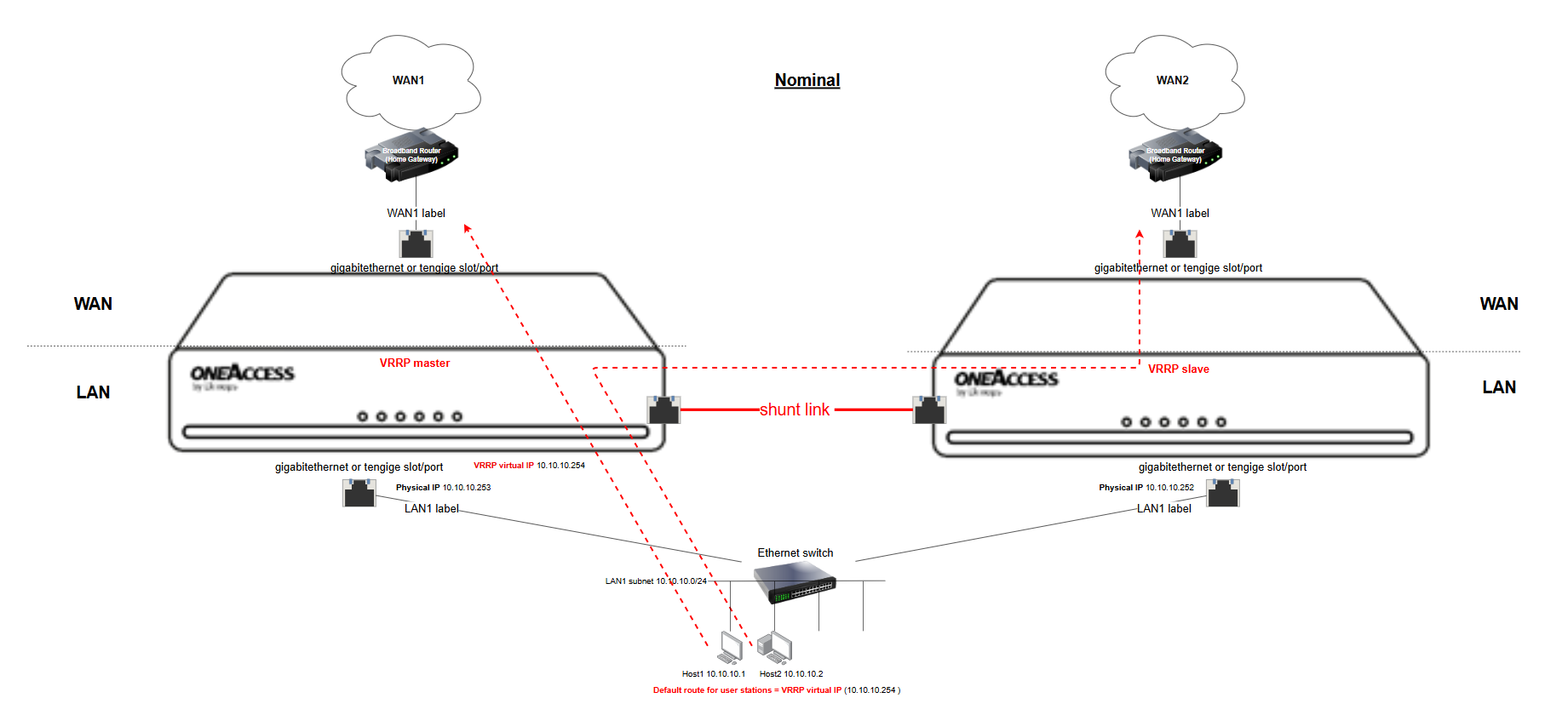
Each router is assigned its own IP address on the LAN subnet, while user devices use a shared VRRP virtual IP address as their default gateway. At any given time, this virtual IP address is hosted by only one router, known as the master router.
Under normal operating conditions, all user traffic is forwarded through the master router.
The two routers are interconnected through a dedicated shunt link, which allows them to exchange traffic and coordination information. This interconnection also enables the site to leverage the WAN connectivity available on both routers.
The following example illustrates the nominal dual-edge operation.
 |
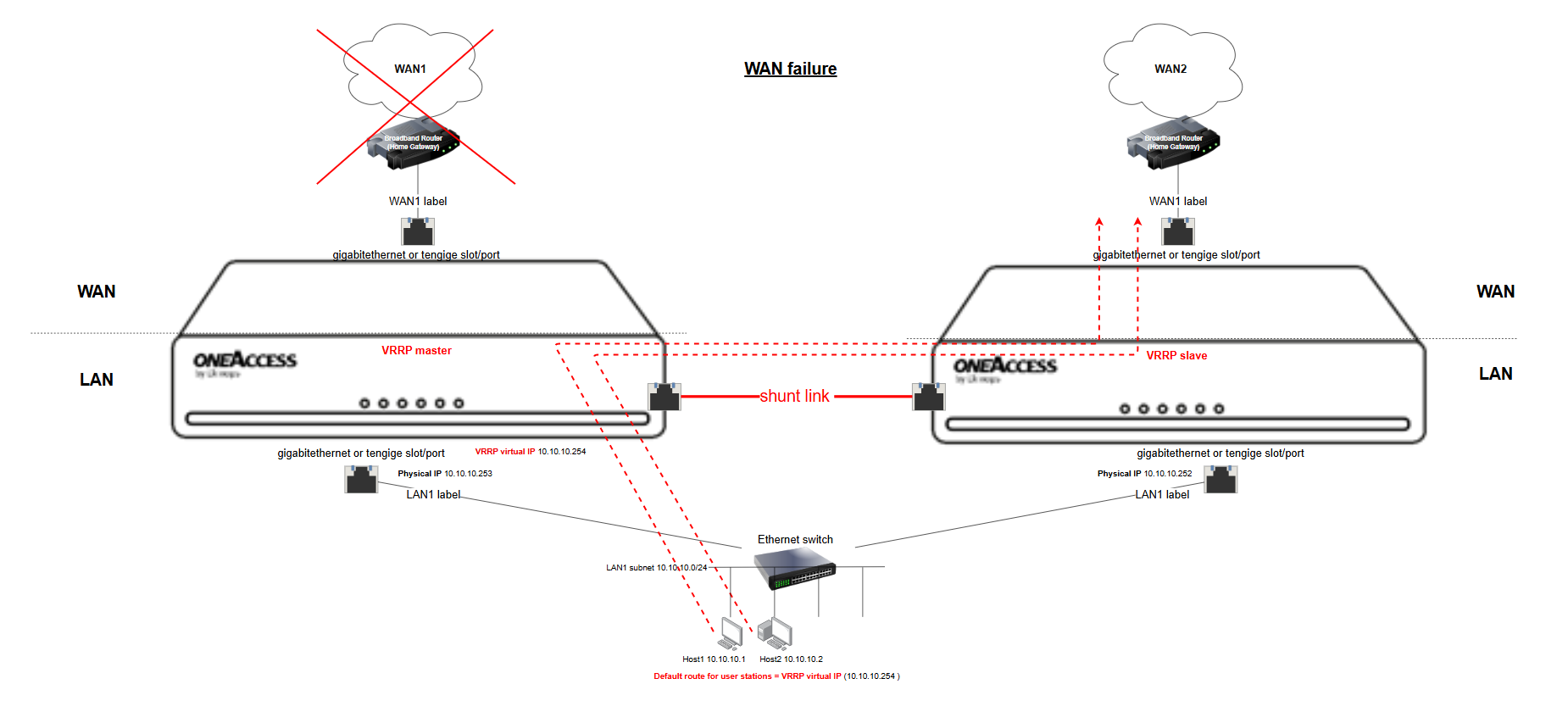
If a WAN connection fails on the master router, user traffic can continue to use the available WAN connectivity of the second router through the shunt link. This ensures service continuity without requiring a gateway change on user devices.
The following example illustrates WAN link failure handling.
 |
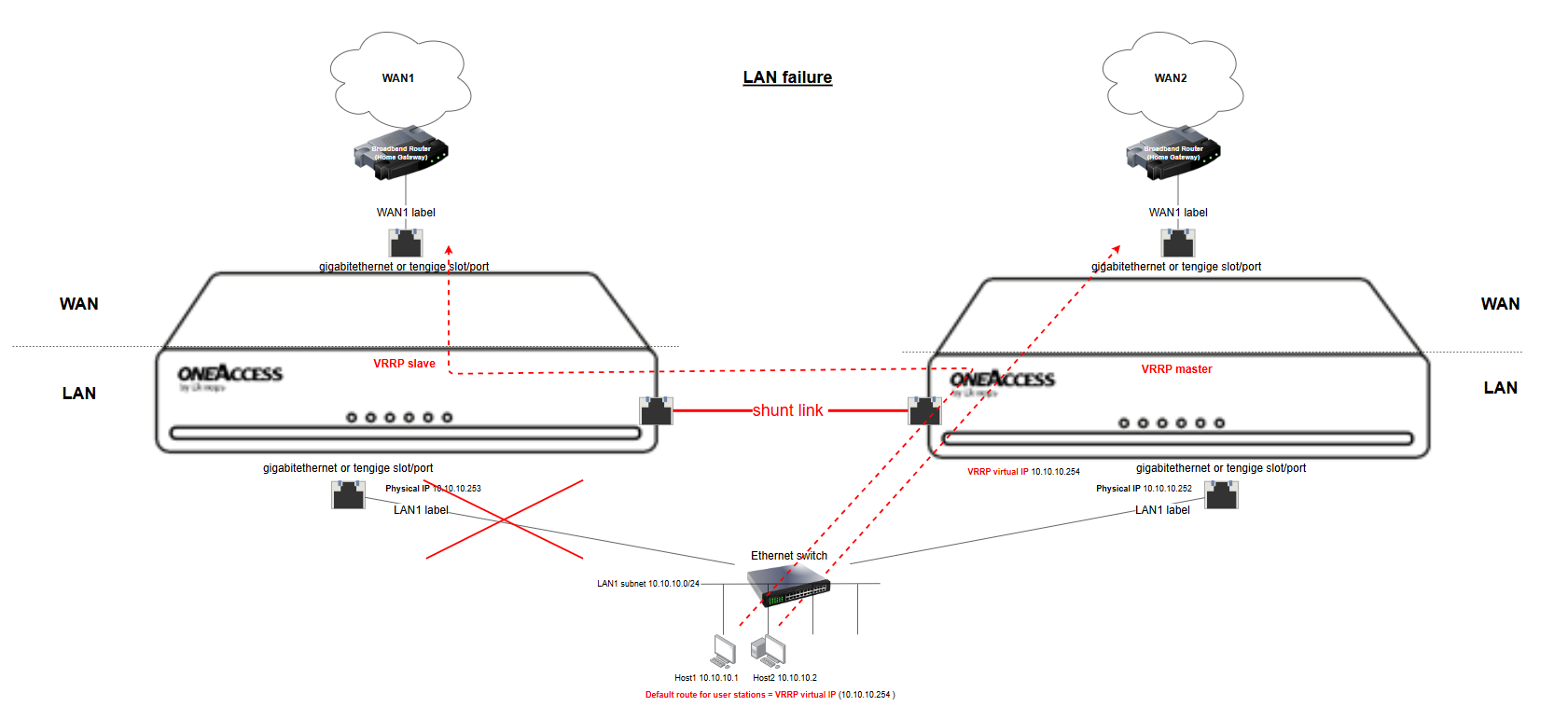
If the master router becomes unavailable, the standby router automatically takes ownership of the VRRP virtual IP address and becomes the new master.
Because user devices continue to use the same virtual gateway address, no client-side reconfiguration is required. Traffic is then forwarded directly through the new master router.
The following example illustrates router failover.
 |
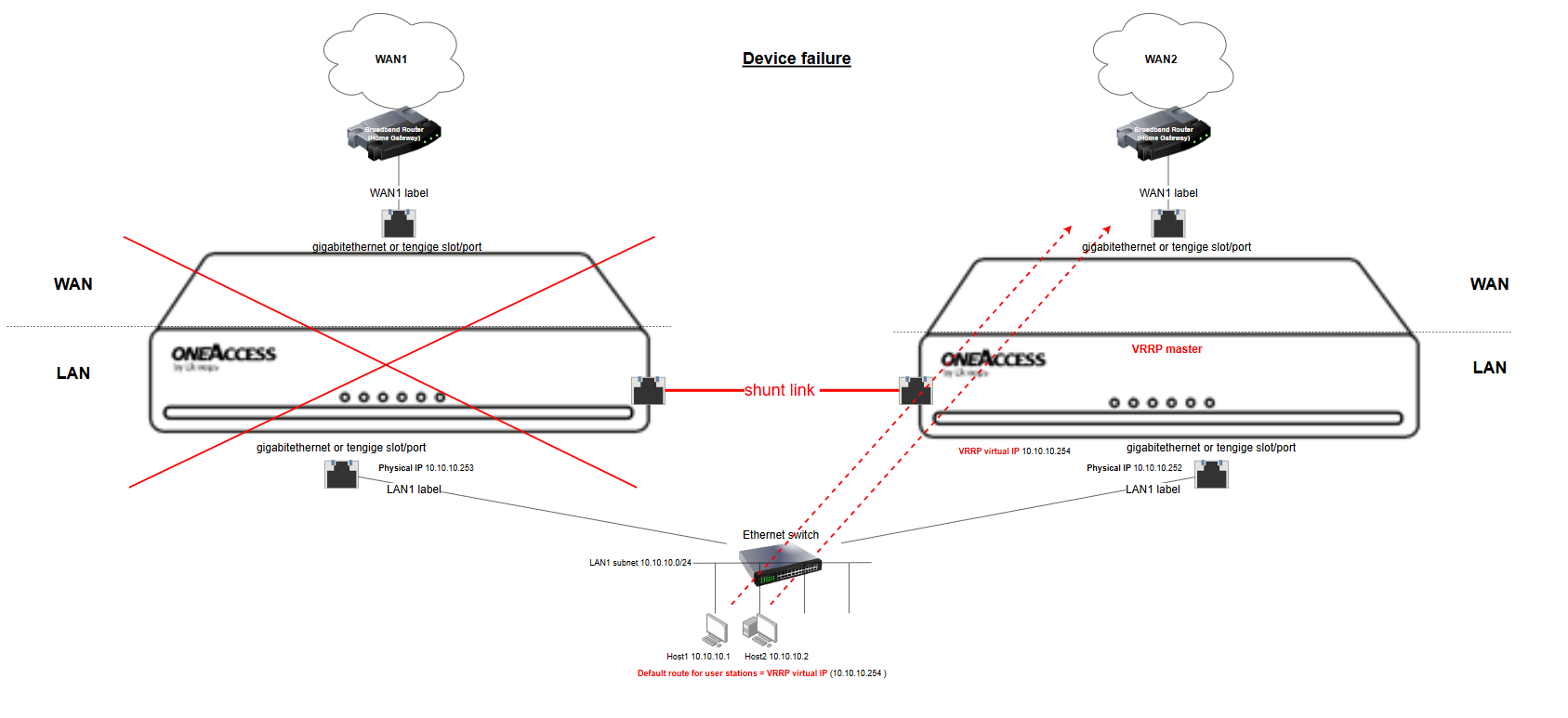
The dual-edge architecture therefore provides resilience against both WAN outages and router failures, ensuring continuous access to Internet and VPN services.
The following example illustrates the fully redundant architecture.
 |
Why Use Dual-Edge Sites?
Dual-edge deployments are typically reserved for sites where network availability is critical.
By combining VRRP on the LAN side, redundant routers, and multiple WAN connections, the site can continue operating even in the event of a router failure or WAN outage.